Application Practice of Android Control Board for Information Display Screen in Information Display Screen Field
android control board for information display screen, as the core control board of information display screen equipment, has been widely used in practical projects. This article shares the application practice and deployment experience of android control board for information display screen in information display screen scenarios.
Project Background
A information display screen equipment manufacturer adopted android board for information display screen as the core control unit, requiring HD display, network communication, and remote management functions. After solution comparison, the RK3568-based android motherboard for information display screen solution was ultimately selected.
Implementation
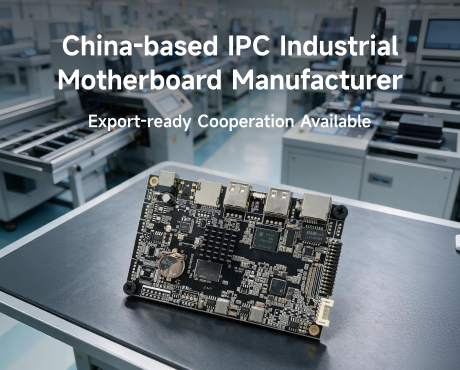
The project deployed android solution board for information display screen as the main control board, driving the display screen via HDMI interface, providing network connection through Gigabit LAN, and connecting peripherals via RS232. The Android system was customized with remote management features, supporting OTA upgrades and remote monitoring.
Results
After deploying android sbc for information display screen, the equipment runs stably with 7×24 hour fault-free operation. The high-performance processor of android board for information display screen ensures smooth operation of information display screen applications, and the rich interfaces meet various peripheral access needs. The modular design of android computing board for information display screen also simplifies maintenance.
For more android board for information display screen application cases, contact +8613261677119, Email androidsbc@163.com.
Direct answer and selection guidance
Application Practice of Android Control Board for Information Display Screen in Information Display The correct answer depends on the complete device requirement: display interface and resolution, connected peripherals, operating system, enclosure, power supply, working environment and production lifecycle must all be evaluated together.
What information is needed?
Provide the panel and touch-controller models, required display mode, camera or scanner type, printer and serial interfaces, USB and GPIO needs, Ethernet or wireless connectivity, Android or Linux version, application deployment method and expected quantity. Connector position and mechanical constraints are equally important when an existing enclosure is involved.
How should compatibility be verified?
Use the actual display and peripherals for sample validation. Test startup and recovery, continuous operation, video playback or application load, network reconnection, watchdog behavior, thermal stability and repeated power cycles. A successful desktop demonstration alone is not sufficient evidence for volume deployment.
What should be confirmed before ordering?
Confirm the approved specification, memory and storage combination, firmware scope, optional modules, documentation, sample result, production lead time and after-sales boundary in writing. Compliance requirements may apply to the complete finished device as well as the motherboard, so buyers should identify the destination market early.
For a project-specific answer, send the interface list, mechanical drawing, target software and operating conditions through the contact page. Additional implementation questions are available in the FAQ section.